
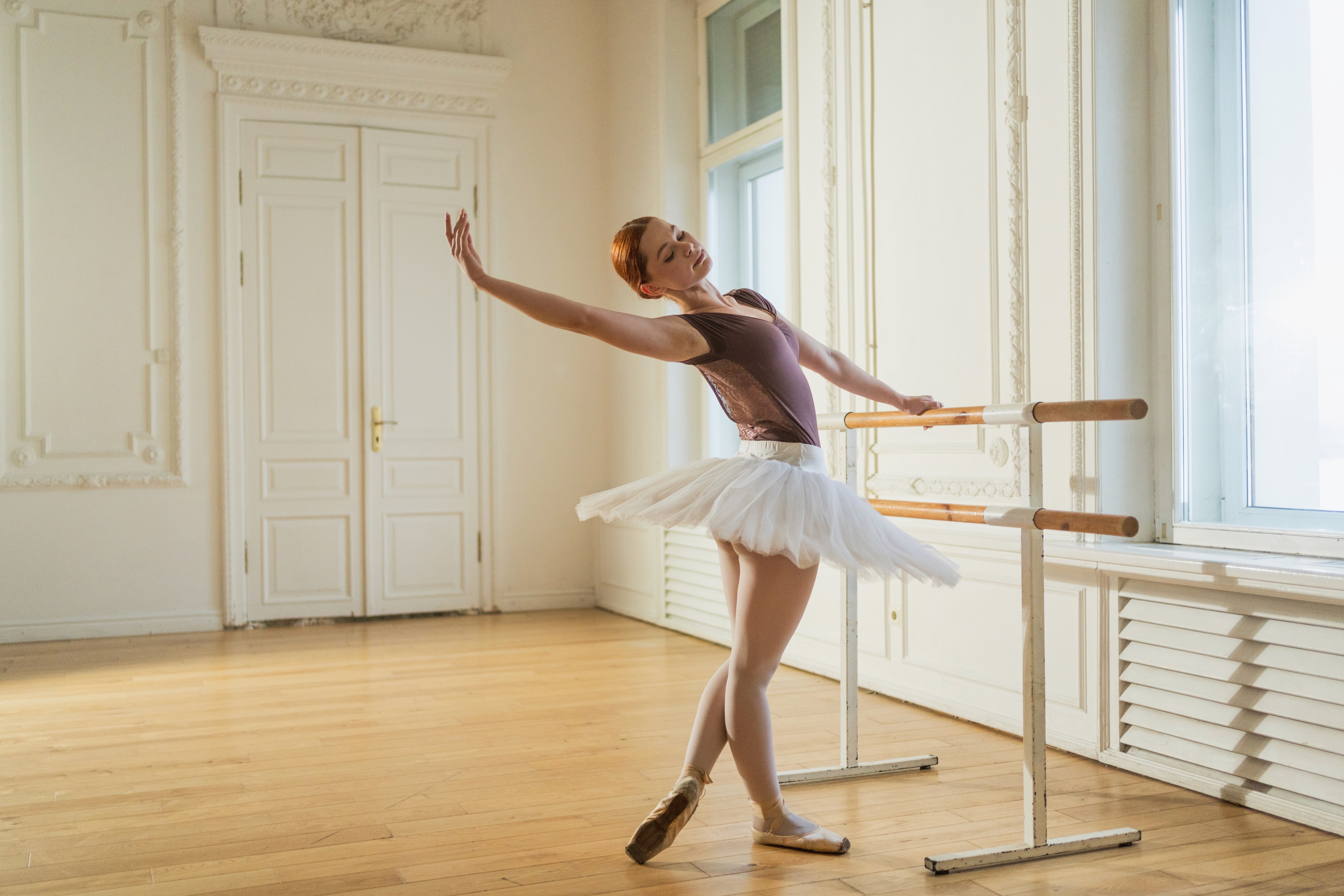
To ensure your students are properly warmed up for their ballet lessons, dance teachers know how important it is to begin lessons with dynamic stretches, not static stretches, which are better saved for after class.
In this post, we’ll highlight some of the best dynamic stretches to start your dance lessons with, including which muscles they target and how they benefit your dancers, so you can kick off class with a variety of effective and safe warm-ups.
1. Diagonal Leg Swings
Muscles: Hip flexors, glutes, hamstrings
Why: Opens hips, improves leg lift, gets the blood flowing, and keeps the glutes warm for jumps and extensions.
How: Swing one leg forward and across your body in a controlled diagonal path, keeping your core engaged and making sure to stand tall.
2. Low Lunge with Side Reach
Muscles: Hip flexors, obliques, quadriceps
Why: Stretches hip flexors and activates the core for stable, aligned movements.
How: Step one foot forward into a low lunge, keeping the back leg long as you reach the same-side arm overhead and slightly back. Return to center and repeat on the other side.
3. Dynamic Side Kicks
Muscles: Glutes, inner thighs, hip abductors
Why: Strengthens the legs while improving turnout and control for side extensions.
How: Lift your leg to the side with your leg straight, then lower it slowly, keeping your torso upright and core engaged.
4. Carioca / Grapevine Steps
Muscles: Hips, adductors, calves
Why: Enhances coordination, lateral agility, and can improve mobility through the hips and lateral movement for traveling steps.
How: Step sideways, crossing one foot in front and then behind, keeping your hips level
5. Mini Pliés in Fifth & Third Positions
Muscles: Quadriceps, hamstrings, glutes, calves
Why: Activates the lower body, warms the major muscle groups, improves knee alignment, and strengthens turnout.
How: Slowly bend and straighten knees in fifth or third position, keeping heels down and back straight; if you use a parallel variation, keep the feet parallel.
6. Spinal Waves / Cat-Cow Flow
Muscles: Spinal erectors, abdominals, shoulders
Why: Mobilizes the spine, improves posture, supports mobility through the thoracic spine, and warms the torso for port de bras.
How: Arch your back up and down in a smooth wave motion, returning through a flat back while engaging your core and shoulders.
7. Standing Hip Openers
Muscles: Hip abductors, glutes, inner thighs
Why: Prepares turnout muscles for extensions, activates key muscles that support hip stability, and improves leg range of motion.
How: Lift one knee up and out to the side, then lower it with control while keeping the standing leg stable, alternating legs.
8. Torso Twists with Arm Reach
Muscles: Obliques, shoulders, spine
Why: Enhances upper body mobility and body awareness, essential for turns and expressive arms.
How: Twist your torso gently side to side, engaging the core muscles as you reach your arms out in the direction of the twist.
9. Heel-to-Toe Rocking
Muscles: Calves, ankles, shins
Why: Activates foot and ankle muscles for balance, relevés, and jumps.
How: Rock forward onto your toes, then back onto your heels, keeping feet hip-width apart.
10. Shoulder Shrugs & Circles
Muscles: Trapezius, deltoids, rotator cuff
Why: Loosens shoulders, helps release tension in the upper body, increases arm mobility, and supports elegant port de bras.
How: Lift shoulders toward ears and perform shoulder rolls, taking the shoulders forward first, then back and down in full circular motions. You can follow with arm circles, letting them gradually increase in size.
Tip: Perform each stretch 8–12 reps per side or 30–60 seconds, gradually increasing your range of motion. A total dynamic warm-up of 8–10 minutes is perfect before ballet class.
Class Manager Means You Can Focus On Stretches
Running a dance studio is like trying to spin 10 plates, all at the same time, but they’re all on different parts of the stage.
You’re having to think about SMART goals, dance lesson plans, recital organising, marketing, accounting, class schedules, teachers, chasing billing and payments, and SO much more.
But when you have a reliable and easy-to-use dance studio software in your back pocket, everything starts to run a lot more smoothly, all whilst saving you time and money.
Want to find out more about how Class Manager can help your dance studio? Book a demo with our team, or create your free account here.
For more information, or warm-up tips and tricks in our latest blog posts:

